Can Hypnosis Improve Test Performance Under Pressure?
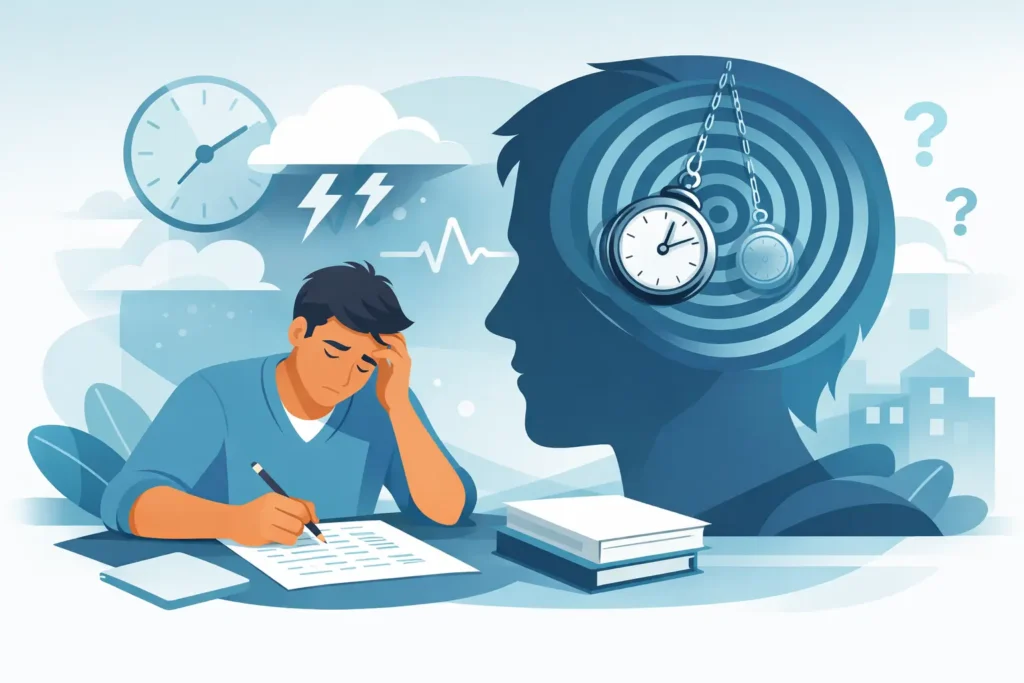
The night before an exam, many capable people know their subject but cannot switch off. Then, in the exam room, a single difficult question can trigger a rush of panic, a blank mind or the familiar thought: “I am going to fail.” Can hypnosis improve test performance in that situation? It can help when anxiety, self-doubt, poor sleep or unhelpful habits are getting in the way of the knowledge you already have.
Hypnotherapy is not a replacement for revision, tuition or proper preparation. It is a practical way of changing the emotional and automatic responses that can make a well-prepared student perform below their true ability. For adults taking professional qualifications, university exams, driving theory tests or returning to study after years away, that difference can be significant.
Why test performance is not only about knowledge
A test measures what you can recall and apply in a limited period of time. Under pressure, the brain can treat the experience as a threat rather than a challenge. Your attention narrows, physical tension rises and working memory becomes harder to access. You may reread the same question repeatedly, rush through answers or freeze completely.
This does not mean you are incapable. It means your nervous system has learned to associate tests with danger, embarrassment, disappointment or past failure. For some people, the pattern began at school. For others, it appears later, when the stakes feel high: an accountancy exam linked to promotion, a medical assessment, a legal qualification or a practical test needed for a new career.
Revision can also become caught up in the same cycle. You put it off because opening the books makes you anxious. Guilt grows. You try to force yourself into an all-night session, retain very little and then use the experience as evidence that you cannot do it. Willpower alone is often a poor long-term answer to an automatic stress response.
Can hypnosis improve test performance?
Hypnosis may improve test performance by helping you feel calmer, more focused and more confident before and during an assessment. In a relaxed, attentive state, hypnotherapy can work with the unhelpful beliefs and conditioned reactions that fuel exam nerves. It can also reinforce the behaviours that support good preparation, such as starting revision sooner, working in manageable blocks and protecting sleep.
You remain aware and in control throughout hypnotherapy. It is not about someone taking over your mind or making you reveal anything you do not want to share. The work is collaborative. You and your hypnotherapist identify what is happening now, what outcome you want and the practical changes that would make the greatest difference.
For example, someone may arrive saying, “I always panic in exams.” Beneath that statement may be a fear of letting their family down, a memory of going blank in a previous test or a perfectionist belief that one mistake means total failure. Addressing the pattern can reduce its power. The aim is not to remove every trace of nerves. A little alertness can sharpen performance. The aim is to move from overwhelming anxiety to calm, useful focus.
What hypnotherapy can help with
The most useful work is usually targeted to your particular barriers. Hypnotherapy may support you to settle physical anxiety symptoms such as a racing heart, nausea or tight breathing. It can help you mentally rehearse entering the exam room with composure, reading questions carefully and recovering after a difficult moment rather than spiralling.
It can also strengthen confidence in a realistic way. Confidence is not pretending you have revised when you have not. It is trusting that you can prepare, use the skills you have practised and respond flexibly if a question is unfamiliar. That mindset helps you use your time more effectively and show the examiner what you genuinely know.
Where procrastination is a problem, sessions may focus on breaking the association between revision and dread. A student who automatically reaches for their phone, finds another household task or tells themselves they will start tomorrow can learn a more helpful response: sit down, begin the first small task and let momentum build.
The role of sleep, focus and mental rehearsal
Many people underestimate how much sleep affects memory, mood and concentration. A run of late nights can make ordinary nerves feel much bigger and leave revision feeling painfully slow. If worry is keeping you awake, hypnotherapy can help you develop a calmer bedtime routine and reduce the mental rehearsal of worst-case scenarios.
Mental rehearsal is also valuable when it is specific. Rather than repeatedly imagining failure, you practise the sequence you want your mind and body to follow. You arrive in good time. You sit down, breathe steadily, read the instructions, begin with a question you can answer and keep moving. If you feel a surge of anxiety, you notice it, use your grounding technique and return to the paper.
This is not magical thinking. It is preparation for the moment your old habits would usually take over. Athletes, performers and speakers use rehearsal because the brain responds well to repeated, believable experience. In test preparation, the same principle can help the unfamiliar feel more manageable.
What results depend on
No ethical hypnotherapist can promise a particular grade or pass. Results depend on the test, how much preparation is needed, the time available and whether there are wider issues affecting concentration or wellbeing. If you have not studied the material, hypnotherapy cannot place it in your memory.
It can, however, help you make better use of the time and ability you have. Someone who is well prepared but highly anxious may notice a relatively quick shift in calmness and confidence. Someone with longstanding avoidance, poor sleep and several past setbacks may benefit from more time and a plan that combines hypnotherapy with realistic study support.
If anxiety is severe, persistent or affecting daily life beyond the test itself, it is sensible to speak with your GP or an appropriate mental health professional too. Hypnotherapy can be part of a wider support plan, rather than carrying the whole burden alone.
How to get the most from hypnotherapy for exams
Start early where possible. Working on exam nerves a few days before an assessment can still be worthwhile, but beginning several weeks ahead gives you time to practise new responses and build consistent revision habits. Many clients find that a focused course of sessions helps them feel more in control, particularly when paired with a clear study timetable.
Be honest about the real issue. You may call it lack of motivation, but fear of failure could be driving it. You may assume you have a bad memory, when the main difficulty is trying to revise while exhausted and anxious. Clearer understanding leads to more precise work.
Between sessions, keep the practical basics simple. Revise in shorter, planned periods rather than waiting for motivation to strike. Test yourself instead of only rereading notes. Take proper breaks, eat regularly and make sleep part of the plan. The purpose is not to create a perfect routine. It is to create one you can repeat even when nerves are present.
At Jennie Francis Hypnotherapy, the focus is on helping clients make practical, measurable changes in a safe and supportive setting, whether sessions take place in person or online. For exam nerves, that means understanding the pressure you are under and helping you approach the test as the capable person you already are.
A calmer way to face the paper
You do not need to wait until you feel fearless before taking the next step. You need a steadier response when pressure arrives: enough calm to think clearly, enough confidence to begin and enough self-belief to continue after an imperfect answer. With sound revision and the right support, an exam can become a moment to demonstrate your learning, rather than a battle with your own mind.