
Online or In Person Hypnotherapy: Which Works?
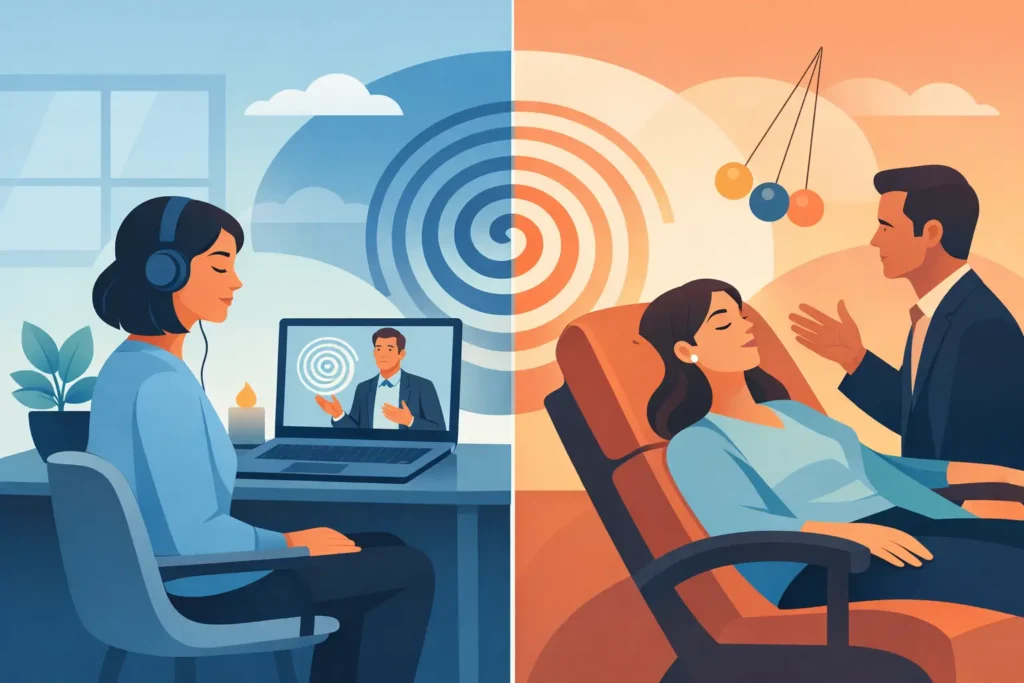
You may be ready to stop smoking, sleep more deeply, feel calmer before a flight or finally speak up with confidence. Then comes a practical question: should you choose online or in person hypnotherapy? The answer is rarely about which format is universally better. It is about where you can feel safe, focused and ready to engage with change.
For many people, hypnotherapy works well in either setting. The relationship with your hypnotherapist, the clarity of your goal and your willingness to practise what you learn matter far more than whether you are sitting in a therapy room or on your own sofa. Still, the setting can make a meaningful difference to comfort, privacy and how easy it is to make sessions part of real life.
Online or in person hypnotherapy: the real difference
Hypnotherapy is a focused, collaborative process. You are not asleep, unconscious or under someone else’s control. You remain aware and able to respond throughout, while your attention is directed away from the usual noise, doubt and habitual reactions that can keep a problem in place.
Whether a session happens online or face to face, the aim is the same: to help you access the part of your mind that can learn new responses more naturally. That may mean feeling calmer in situations that once triggered anxiety, reducing the pull of cigarettes or alcohol, changing an unhelpful eating pattern, or becoming more composed before an exam, presentation or childbirth.
The format changes the surroundings, not the purpose of the work. A skilled practitioner will adapt the session to you, your goals and the way you respond. Some clients make rapid progress online. Others find the dedicated environment of a face-to-face appointment helps them switch off from everyday demands more easily.
Why online hypnotherapy suits many clients
Online hypnotherapy gives you access to one-to-one support wherever you are in the UK. If you live outside Brighton and Hove, have a demanding job, care for children, travel frequently or simply prefer the privacy of home, it can remove barriers that might otherwise delay getting help.
There is no journey, parking concern or need to rush from an appointment back into the rest of your day. That extra ease can be particularly valuable when you are dealing with insomnia, anxiety, panic, confidence issues or a habit you feel embarrassed to discuss. You can finish a session and remain in a familiar, comfortable space.
For relaxation-based work, being at home can be a real advantage. You might settle into your favourite chair with a blanket nearby, knowing you will not need to travel afterwards. Many clients also like practising the techniques they learn in the same environment where they want to use them – before sleep, ahead of a work call or when a craving tends to appear.
Online sessions do need a little preparation. A quiet room, a stable internet connection, headphones if helpful and a device positioned so you can be seen comfortably will make a difference. Ideally, ask not to be interrupted and put notifications on silent. If your home is busy or you cannot find a private space, online work may feel less relaxing than it should.
When face-to-face hypnotherapy feels better
An in-person session offers something increasingly rare: protected time away from home, work and the people who usually need something from you. For some clients, entering a calm therapy room creates an immediate mental boundary. This is time set aside for them and the change they want to make.
Face-to-face hypnotherapy can be especially appealing if you have tried online therapy before and found yourself distracted by chores, emails or family life. You may also prefer the reassurance of being physically in the room with your practitioner, particularly if hypnotherapy is new to you or the issue feels emotionally significant.
There is no prize for choosing the more convenient option if it does not allow you to settle. If you know you relax more deeply away from your usual routines, or you value the experience of a dedicated appointment in Brighton or Hove, in-person work may be the right choice.
A face-to-face appointment does require travel, time and organisation. For a parent managing school runs, a professional with a packed diary or someone who feels anxious about leaving the house, these practical pressures can become another reason to postpone the support they need. In that case, online sessions may help you begin sooner and attend more consistently.
Questions that help you choose
Start with a simple question: where will I be most able to give this hour to myself? Not where should you feel comfortable, but where do you actually feel able to speak openly, relax and focus?
Think about privacy as well. At home, can you close the door and know nobody will overhear? At a clinic, will the journey and unfamiliar surroundings make you tense, or will they give you welcome space from daily life? Neither answer is wrong.
Your goal can shape the decision too. Someone seeking help with fear of flying might appreciate practising calming techniques from home before travel. Someone working on public speaking may value using online sessions to rehearse feeling composed on screen. Yet a person whose home environment is linked to stress, overeating or difficult relationships may prefer the breathing room of an in-person appointment.
It is also worth being honest about what helps you follow through. The best therapeutic format is the one you can attend reliably. Consistency supports progress, particularly when you are replacing an entrenched habit with a more helpful response.
What good hypnotherapy should feel like in either format
A professional session should never feel mysterious or forceful. You should understand what you are working on, have the chance to ask questions and feel respected throughout. Your practitioner should listen carefully to the outcome you want, rather than offering a one-size-fits-all script.
You may experience calm, focused attention, vivid imagination or a pleasant sense of physical relaxation. You may also simply notice that you are listening closely. People respond differently, and a dramatic sensation is not required for useful work to take place.
The most meaningful signs of progress tend to show up between sessions. You might find a trigger has less power, make a choice that previously felt difficult, sleep more soundly or approach a situation with greater ease. Change can sometimes be quick, but it is still personal. The number of sessions needed depends on the issue, your history and the outcome you want to achieve.
At Jennie Francis Hypnotherapy, sessions are focused on practical, measurable change, with support offered both face to face and online. The aim is not to make you dependent on therapy. It is to help you feel able to respond differently and move forward with greater confidence.
A note on safety and expectations
Hypnotherapy can be a valuable support for emotional, behavioural and performance-related concerns, but it is not a substitute for medical diagnosis, emergency care or specialist treatment where that is needed. If you have a diagnosed mental health condition, are taking medication or have concerns about whether hypnotherapy is suitable, discuss this openly before beginning.
Be wary of anyone who guarantees a particular outcome without understanding your circumstances. Effective hypnotherapy is compassionate and purposeful, but it also respects your individuality. You are not being fixed by someone else. You are being supported to make changes that fit the life you want to live.
The right setting is the one that lets you arrive fully, speak honestly and leave with a clearer sense that change is possible. If home gives you calm and privacy, online hypnotherapy may be an excellent fit. If a dedicated therapy room helps you set down the weight of everyday life, choose face to face. The most helpful first step is simply choosing a format that makes it easier to begin.