
10 Top Ways to Improve Sleep Naturally Tonight
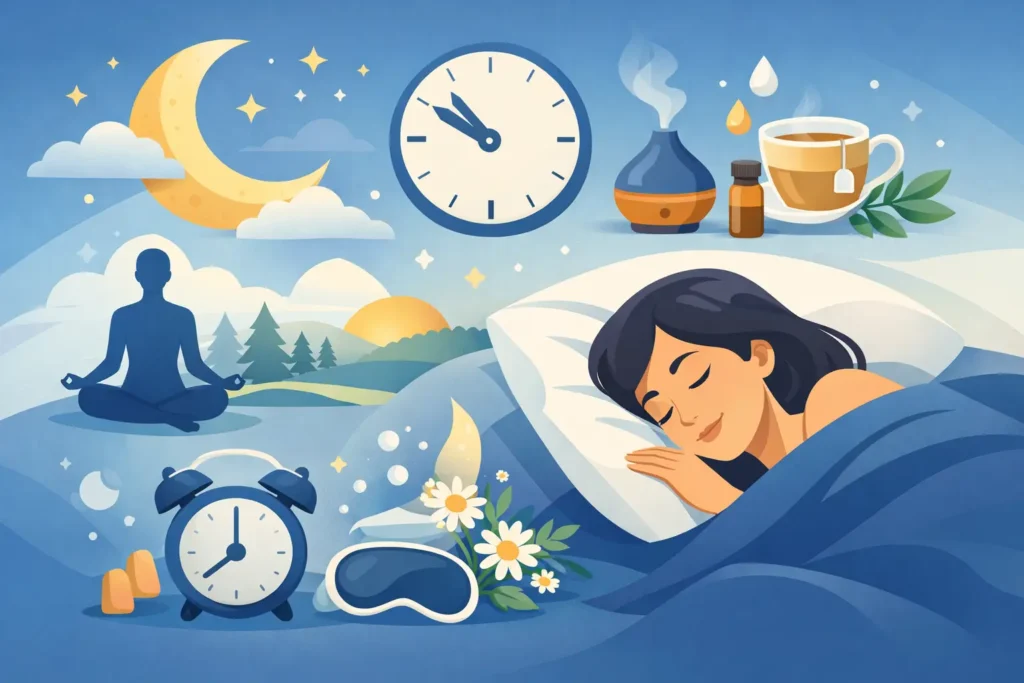
It is 2.17am, you are exhausted, and your mind has suddenly decided this is the ideal time to revisit tomorrow’s meeting, a difficult conversation from three years ago and every item on your to-do list. If that sounds familiar, the top ways to improve sleep naturally are not about forcing yourself to switch off. They are about teaching your mind and body that night-time is safe, predictable and genuinely for rest.
A poor night can happen to anyone. But when broken sleep becomes a pattern, it can affect your concentration, confidence, mood and ability to cope with everyday pressure. The good news is that sleep is a skill your nervous system can relearn. Small, consistent changes often make a meaningful difference, particularly when stress or anxiety has become part of the bedtime routine.
Top ways to improve sleep naturally: start with your body clock
1. Keep your wake-up time steady
The most powerful part of a sleep routine is often the morning, not the evening. Getting up at roughly the same time each day helps set your internal body clock, including at weekends. A lie-in after a bad night is tempting, but it can reduce your natural sleep pressure the following evening and keep the cycle going.
Choose a wake-up time that works for your real life and keep it within around an hour each day where possible. If you have slept badly, get up, have a shower, eat something nourishing and carry on gently. Your body is more likely to sleep well the next night when it has a clear rhythm to follow.
2. Get daylight early
Natural daylight tells the brain that the day has begun. Try to get outside in the first hour or two after waking, even if it is only for ten minutes while you walk to the shops, stand in the garden or have your first drink of the day near a window.
This is especially useful during darker British winters, when mornings can feel relentlessly grey. Daylight supports the natural timing of melatonin, the hormone involved in sleepiness later in the day. It will not solve severe insomnia alone, but it is a simple foundation that many people overlook.
3. Build movement into the day
Regular movement can reduce stress and help deepen sleep. It does not need to mean an intense gym session. A brisk walk, swimming, yoga, gardening or cycling can all help your body use up some of the physical tension that otherwise follows you to bed.
Timing matters. Some people sleep well after an evening workout, while others feel alert for hours afterwards. Notice your own response. If exercise leaves you buzzing, aim to finish vigorous activity earlier and choose stretching or a slow walk later in the evening instead.
Create an evening that tells your brain to slow down
4. Give yourself a realistic wind-down period
Many people expect themselves to move directly from emails, family responsibilities, scrolling and problem-solving into sleep. Yet the mind needs a transition. Aim for 30 to 60 minutes before bed where the purpose is simply to reduce stimulation.
Your wind-down does not have to look perfect. It could be a warm shower, reading a few pages of a book, gentle stretches, quiet music or preparing things for the morning so your brain has less to hold onto. The key is repetition. When you do similar calming things at a similar time, they become cues for rest.
5. Make the bedroom feel like a place for sleep
A cool, dark and quiet room gives sleep the best chance. Blackout blinds, an eye mask, earplugs or a fan for soft background sound can be useful if your home or neighbourhood is noisy. Comfort matters too: bedding, temperature and a mattress that supports you properly are not luxuries when sleep is already fragile.
Try to keep work, bills and difficult conversations out of the bedroom where you can. If you regularly answer messages in bed, your brain can begin to associate that space with alertness and responsibility rather than sleep. Small boundaries can make a larger psychological difference than expected.
6. Be thoughtful with caffeine, alcohol and late meals
Caffeine can stay in the system for many hours. If you struggle to fall asleep, experiment with making your last coffee, tea, cola or energy drink earlier in the afternoon. You do not necessarily need to give it up completely, but an 8pm coffee is unlikely to support a settled night.
Alcohol can make you feel sleepy at first, but it often leads to lighter, more disrupted sleep later on. Likewise, a heavy meal close to bedtime may leave you uncomfortable, while going to bed very hungry can keep you awake. A balanced evening meal and, if needed, a light snack are often more helpful than extremes.
7. Put a boundary around screens, not a ban on life
Blue light is only one part of the problem with mobile phones and laptops. The bigger issue is what you are doing on them. Work messages, upsetting news, social media comparison and endless short videos all tell the brain to stay engaged.
Try setting a clear cut-off point for stimulating content, perhaps 30 minutes before bed. If you use your mobile phone for an alarm or calming audio, that is fine. The goal is not perfection. It is to stop giving an already busy mind new material to process at midnight.
When a busy mind is the real sleep problem
8. Empty your thoughts onto paper
If your thoughts start racing as soon as the lights go out, set aside ten minutes earlier in the evening to write them down. List what is worrying you, what needs doing tomorrow and one realistic next step for each practical concern. You are not trying to solve your life before bed. You are showing your mind that these thoughts have been noticed and do not need to be rehearsed all night.
For emotional worries that cannot be solved immediately, use a simple sentence: “I can return to this tomorrow.” It may feel basic, but repetition helps interrupt the habit of treating bedtime as thinking time.
9. Stop trying so hard to sleep
The more you check the clock, calculate how few hours remain and demand sleep from yourself, the more alert your body can become. This is a common pattern in insomnia. Bed becomes a place of effort, frustration and watchfulness.
If you have been awake for what feels like 20 minutes or more, get up and sit somewhere dimly lit. Do something quiet and deliberately uninteresting, such as reading a familiar book. Return to bed when you feel sleepy again. This gently rebuilds the association between bed and sleep rather than bed and struggle.
Avoid clock-watching if possible. Turn the clock away or keep your mobile phone out of reach. Knowing it is 3.42am rarely improves the situation.
10. Address the stress beneath the sleeplessness
Sometimes sleep hygiene is not the whole answer because the real issue is a nervous system that has been on high alert for too long. Anxiety, grief, pressure at work, health worries, relationship strain and a fear of not sleeping can all keep the mind scanning for danger when it needs to rest.
This is where personal support can be valuable. Hypnotherapy may help some people reduce the anxious thought patterns and learned alertness that keep insomnia going, while building calmer responses that feel more natural than relying on willpower at 1am. It is not about being controlled or made to sleep on command. It is a focused way of working with the unconscious habits that can keep you stuck.
If sleep problems have lasted for months, are affecting your mental health or daily safety, or include loud snoring, gasping, breathing pauses or overwhelming daytime sleepiness, speak to your GP. Sleep apnoea, depression, medication effects and other health conditions need proper assessment. Natural strategies can support good sleep, but they should not replace medical care when there are warning signs.
Start with one or two changes rather than attempting a complete bedtime overhaul tonight. A steadier wake-up time, daylight in the morning and a calmer final half-hour are often enough to create momentum. You do not need to earn rest or force it. With the right conditions and support, your mind can learn to let go again.