
Therapy vs Medication for Insomnia: What Works?
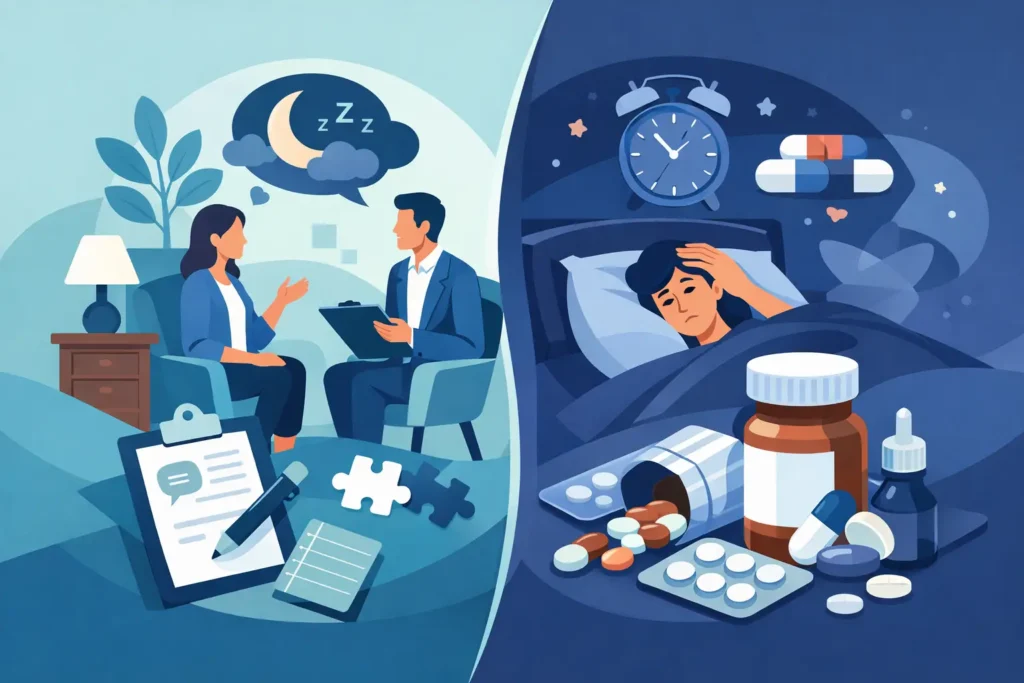
At 3am, the question is rarely theoretical. You may be staring at the ceiling, calculating how little sleep you can manage on tomorrow, and wondering whether you need a sleeping tablet or a different kind of help. The therapy vs medication insomnia decision matters because each route can bring relief, but they work in very different ways.
For many people, insomnia is not simply a lack of tiredness. It is a learned cycle of alertness, worry and habits that have become attached to the bedroom. The most useful treatment is the one that addresses what is keeping your sleep problem going, while also protecting your health and safety.
Therapy vs medication for insomnia: the key difference
Medication can reduce symptoms quickly. Therapy aims to change the patterns behind them. Neither is automatically right or wrong, and sometimes a GP may recommend both for a short period. The question is whether you need immediate, time-limited support, longer-lasting change, or a carefully planned combination.
Sleep medicines can be helpful when insomnia is acute: perhaps during a bereavement, severe stress, a painful illness or a short-term crisis. They may help you get through a difficult patch when exhaustion is affecting your ability to function. However, many prescription sleeping tablets are intended for short-term use because tolerance, dependence, daytime drowsiness and withdrawal or rebound insomnia can become concerns.
Therapy takes more active involvement, but it can give you skills and new responses that remain useful after sessions end. Cognitive behavioural therapy for insomnia, usually called CBT-I, is widely regarded as a first-line psychological treatment for ongoing insomnia. It helps people change sleep habits, unhelpful beliefs about sleep and the anxious effort to force sleep to happen.
Hypnotherapy may also be a supportive option for people whose sleeplessness is closely linked to stress, racing thoughts, anxiety or an ingrained association between bed and being awake. It is not about being controlled or unconscious. In a calm, focused state, you work with suggestions and strategies designed to help your mind and body respond differently to bedtime.
When medication may be the sensible choice
There is no prize for struggling on without medical support. If you have barely slept for several nights, are feeling unsafe, or your mental or physical health is deteriorating, speak to your GP, NHS 111 or an appropriate urgent service. Severe sleep loss deserves proper assessment.
A clinician may consider medication when a short period of rest is necessary to stabilise a situation. This might be after a major life event, during a temporary medical problem, or while another treatment begins to take effect. Some medicines used for sleep are sedatives; others may be prescribed where pain, depression, anxiety or another condition is also affecting rest. The decision should be individual, not based on what worked for a friend.
Before starting anything, ask practical questions. How long should I take it? What are the likely side effects? Can it affect driving, work, alcohol use or other medicines? What is the plan for stopping? A clear exit plan is particularly valuable with medicines that can lead to tolerance or dependence.
Over-the-counter remedies are not automatically risk-free either. Antihistamine-based sleep aids can leave some people groggy the next day, and supplements may interact with prescribed medication. “Natural” does not always mean suitable. Your pharmacist or GP can advise according to your circumstances.
Medication does not always solve the sleep fear
One of insomnia’s cruellest features is that the harder you try to sleep, the more awake you can become. A tablet may create a welcome break from that cycle, but it does not necessarily change the fear of another bad night, the habit of clock-watching, or the tension that appears as soon as your head reaches the pillow.
That is why medication alone can feel less effective over time for chronic insomnia. The underlying pattern may still be waiting when the prescription ends.
Why therapy can create longer-term change
Insomnia often develops for a good reason. A stressful period, a new baby, grief, illness, shift work or anxiety can disrupt sleep. Then, even after the original trigger has eased, the brain may continue to treat bedtime as a time for monitoring, problem-solving and staying on guard.
Therapy gives that pattern attention rather than simply asking you to be more disciplined. CBT-I commonly looks at your sleep schedule, time spent awake in bed, napping, caffeine and alcohol, as well as thoughts such as “If I do not sleep for eight hours, tomorrow will be a disaster.” The goal is not perfection. It is to rebuild confidence in your natural ability to sleep.
For some people, the emotional component is the main issue. They are exhausted but mentally busy, replaying conversations, anticipating problems or feeling a surge of dread as evening approaches. Hypnotherapy can help reduce this conditioned response, strengthen relaxation skills and rehearse a calmer relationship with sleep. It may be particularly appealing if you have tried to reason yourself out of insomnia and found that willpower only makes you more alert.
At Jennie Francis Hypnotherapy, the work is focused on practical change: helping clients feel safer, calmer and less stuck in the patterns that have kept sleep difficult. Sessions are tailored, because insomnia in a parent who wakes in anticipation of a child crying is not the same as insomnia in a professional whose mind remains in work mode at midnight.
What therapy cannot promise
A responsible therapist will not promise that every night will be perfect, or that a single session can remove all sleep difficulties. Sleep can be affected by hormones, pain, medication, breathing conditions, depression, trauma, alcohol, menopause, restless legs and many other factors. These need to be considered rather than explained away as stress.
Therapy also works best when you are willing to practise the agreed approach between sessions. That does not mean striving anxiously for the “right” bedtime routine. It means giving the process enough consistency for your brain to learn a new association.
Choosing the right route for your insomnia
Start with the duration and impact of the problem. A few poor nights after a difficult event may call for reassurance, sensible sleep habits and, where appropriate, a brief medical conversation. Insomnia that has lasted three months or more, or regularly affects your mood, concentration, relationships and work, usually deserves a fuller assessment and a structured treatment plan.
Consider what happens before bed and during the night. If pain, loud snoring, choking or gasping, frequent urination, medication changes or a physical symptom is disturbing sleep, speak to a GP. Sleep apnoea, for example, should not be treated as ordinary insomnia. If low mood, panic, intrusive memories or alcohol dependence are present, these may need specialist medical or psychological support alongside sleep work.
If your main experience is a switched-on mind, fear of not sleeping, a sense of being unable to relax, or years of trying every sleep tip without lasting success, therapy is likely to be worth exploring. Many people find relief in finally having a structured space to understand what is happening rather than blaming themselves for it.
A balanced plan is often the strongest one
The choice need not be therapy or medication in every case. A GP may prescribe short-term medication while you begin CBT-I, counselling or hypnotherapy. The medication can provide breathing space; therapy can help make that breathing space last.
What matters is that the plan is reviewed. If you are taking a sleep medicine regularly, do not stop suddenly without medical advice. If you are in therapy but your sleep is worsening, mention it promptly and seek medical input where needed. Good care is responsive, not rigid.
You can also support either route with a few realistic changes: keep a broadly regular waking time, reserve the bed for sleep and intimacy where possible, reduce late caffeine, and avoid turning sleep into a nightly performance test. These are not magic rules. They simply give your body clearer cues and reduce the pressure that can keep insomnia alive.
The most encouraging truth is that sleep is not a skill you have lost forever. Whether you begin with medical support, therapy or both, the aim is the same: to help bedtime feel ordinary again, and to trust that rest can return without a nightly battle.