
Online Hypnotherapy for Anxiety Relief
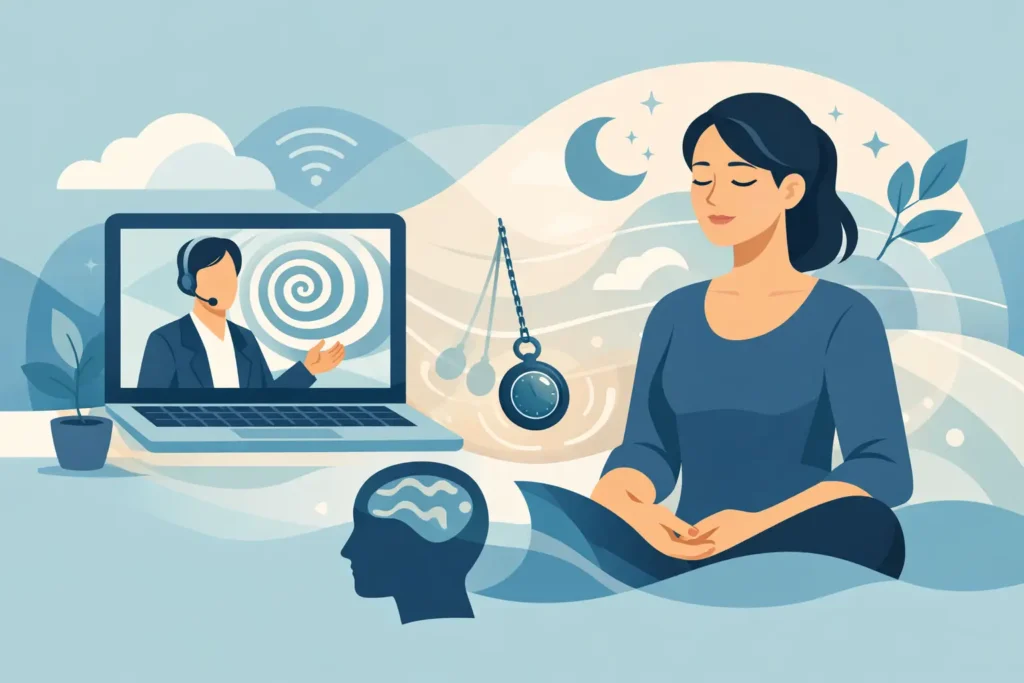
That familiar rush can start anywhere – before a meeting, on the school run, late at night when the house is quiet, or for no obvious reason at all. If anxiety has been dictating how you think, sleep, work or cope, online hypnotherapy for anxiety relief can offer a calm, focused way to break the pattern without leaving home.
For many people, anxiety is not just worry. It becomes a cycle. Your mind predicts danger, your body responds as if the danger is already here, and then the physical symptoms make everything feel more convincing. A racing heart, tight chest, shallow breathing, dread in the stomach, overthinking, avoidance, poor sleep – all of it can start to feel automatic. That is often the point where willpower stops being enough.
Why anxiety can feel so hard to shift
Most anxious people are not weak, dramatic or incapable. In fact, they are often highly capable people who have spent a long time holding everything together. The problem is that anxiety does not sit neatly at the level of logic. You can know you are safe and still feel on edge. You can tell yourself to calm down and still lie awake at 3am with your thoughts racing.
This is where hypnotherapy can be especially useful. Rather than trying to battle anxiety thought by thought, it works with the part of the mind that has learned the anxious response in the first place. If the unconscious mind has linked ordinary situations with stress, pressure or fear, those reactions can keep firing long after they are helpful.
Hypnotherapy aims to interrupt that old conditioning and replace it with something more useful – a sense of calm, control and steadiness that feels more natural. For many clients, that is why change can happen faster than they expect.
How online hypnotherapy for anxiety relief works
Online sessions are private, straightforward and more effective than many people first assume. You do not need to travel, sit in traffic or manage the stress of getting to an appointment while already anxious. You can be in your own home, in a familiar chair, with a blanket if you like, and still receive focused one-to-one support.
The process usually begins with understanding how anxiety shows up for you. This matters because anxiety is not the same for everyone. One person may struggle with constant background tension and overthinking. Another may be dealing with panic attacks, social anxiety, fear of flying, exam nerves, public speaking anxiety or sleep disruption. The trigger is different, but the mechanism underneath is often similar.
Once the pattern is clear, hypnosis helps you move into a relaxed, receptive state. You are not unconscious, not asleep and not out of control. You remain aware and able to respond. Most people describe it as deeply relaxing, a bit like that drifting state just before sleep, but with clear focus.
In that state, the mind is often more open to helpful suggestions and emotional resetting. This is where the work can be powerful. Instead of rehearsing fear, you begin to rehearse safety. Instead of bracing for the worst, your mind and body start learning a different response.
What makes online sessions appealing for anxious clients
If you live in Brighton or Hove, face-to-face sessions may suit you. But for many clients across the UK, online hypnotherapy is not a compromise. It is often the easier starting point.
When anxiety is already making life feel smaller, removing practical barriers matters. You do not need to navigate parking, public transport or a waiting room. If your anxiety is linked to travel, being out of the house, social discomfort or time pressure, online sessions can feel significantly more manageable.
There is also something valuable about beginning therapy in the environment where anxiety often happens. If evenings are difficult, if work from home has become stressful, or if your bedroom has become associated with poor sleep and mental noise, learning calm responses in your own space can help those changes carry over into daily life more quickly.
That said, online work does depend on a few basics. You need a reasonably quiet space, a stable internet connection and enough privacy to relax properly. If home is noisy or interruptions are likely, that can affect the experience. It does not make online therapy impossible, but it is worth planning ahead.
What anxiety issues can be helped with hypnotherapy?
Anxiety is a broad term, and one reason people delay getting help is that they are not sure whether their problem is serious enough or specific enough. In practice, hypnotherapy can support a wide range of anxiety-related difficulties.
This includes general anxiety, panic attacks, social anxiety, work stress, interview nerves, health anxiety, fear of flying, driving anxiety, performance anxiety, exam nerves and sleep problems driven by an overactive mind. It can also help when anxiety sits underneath other habits and behaviours, such as emotional eating, smoking, drinking too much, avoidance or persistent self-doubt.
The key question is not whether your anxiety fits a neat label. It is whether your mind and body have got stuck in a reaction that no longer serves you.
Does it work quickly?
Many clients seek hypnotherapy because they do not want to spend months circling the same issue. They want relief, and they want a practical route forward. That is a reasonable goal.
A well-structured hypnotherapy approach is often designed to create measurable change within a relatively short number of sessions. Three to six sessions is a realistic timeframe for many people, although it does depend on the nature of the problem, how long it has been there and whether the anxiety is linked to a single trigger or a more complex history.
Someone with a clear performance-related issue may improve very quickly. Someone whose anxiety has been present for years, affects several areas of life and has become tied to low confidence or chronic stress may need a little more support. Faster does not mean rushed. It means focused.
What if you are sceptical?
That is completely fine. Many people are curious about hypnotherapy but wary of it at the same time. They have seen stage hypnosis, worry they will lose control, or assume it sounds too simple to be credible.
Good hypnotherapy is not about control. It is about cooperation. You cannot be made to do anything against your will, and you do not need to force the process. In fact, clients who do well are often those who simply allow themselves to engage with it rather than trying to perform it perfectly.
You also do not need to “believe” in hypnotherapy in a blind sense. You just need to be willing to focus, relax and work with an experienced practitioner who understands anxiety properly. A safe, professional approach makes a great deal of difference here.
Why experience matters with anxiety treatment
Anxiety can look simple on the surface and still have several layers underneath. A person may present with panic before presentations, but the real pattern could involve fear of judgement, old conditioning from school, perfectionism and a deeply learned need to stay in control. Another may call it stress, while actually living in a near-constant state of nervous system overload.
That is why experience matters. A skilled hypnotherapist does not just apply a generic script and hope for the best. They listen carefully, identify what is maintaining the pattern and tailor the work accordingly.
Jennie Francis Hypnotherapy has spent more than two decades helping clients with anxiety, fears, confidence issues and behavioural change, including clients who have felt stuck for far too long. For people who want a professional, caring and results-focused approach, that depth of experience can be reassuring.
Is online hypnotherapy for anxiety relief right for you?
If anxiety is beginning to shape your choices, your sleep, your confidence or your day-to-day quality of life, it is worth taking seriously. You do not have to wait until things feel unbearable.
Online hypnotherapy can be a strong option if you want private, one-to-one support that works with the root of the anxious response rather than asking you to wrestle with symptoms on your own. It may suit you especially well if you are busy, prefer discretion, live outside your therapist’s local area, or simply feel more comfortable starting from home.
It may be less suitable if your home environment is too chaotic for uninterrupted sessions, or if you know you respond better to in-person contact. Sometimes the best format comes down to what helps you feel safe enough to engage fully.
Anxiety has a way of convincing people that this is just how they are. It isn’t. With the right support, the mind can learn a different response, and life can start to feel bigger, calmer and more manageable again.