
A Clear Guide to Panic Attack Recovery
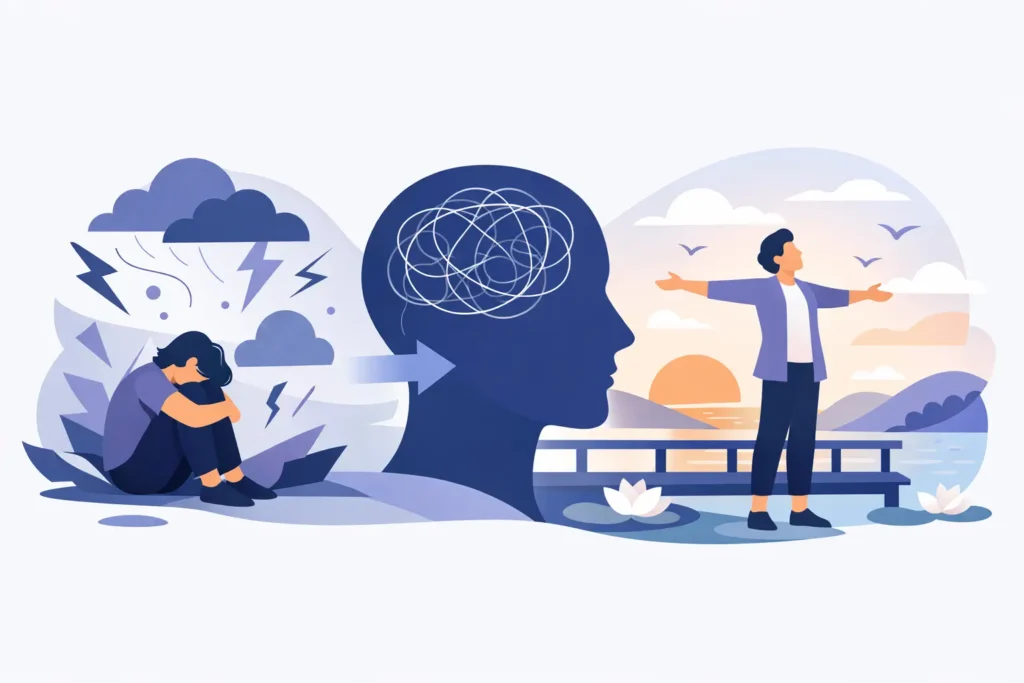
A panic attack can make an ordinary moment feel suddenly unsafe. You might be on a train, in a supermarket queue, driving to work or simply lying in bed, and within seconds your body seems to turn against you. If you are looking for a guide to panic attack recovery, the first thing to know is this: panic attacks are frightening, but they are treatable, and recovery is absolutely possible.
For many people, the most distressing part is not the attack itself but what happens afterwards. You start scanning for signs that it might happen again. You avoid places, situations or sensations that now feel risky. Confidence drops. Life gets smaller. That is why recovery is not only about getting through an attack in the moment. It is about breaking the cycle of fear, anticipation and avoidance that keeps panic going.
What panic attack recovery really means
Recovery does not mean never feeling anxious again. It means no longer being ruled by the fear of panic. Your heart may still race occasionally. You may still have stressful days. But those sensations stop carrying so much threat, and your nervous system learns that you are safe.
That distinction matters. Many people unintentionally make recovery harder by trying to eliminate every anxious feeling. The more you monitor yourself, the more sensitised you become. A better goal is to change your response so the sensations lose their power.
Panic attacks are driven by a misfiring alarm system. Your body interprets something as dangerous and releases a surge of adrenaline. That can cause a pounding heart, dizziness, tingling, breathlessness, sweating, nausea or a sense of unreality. These symptoms are intense, but they are not dangerous in themselves. The body is trying to protect you, even though it has got the message wrong.
The first stage of a guide to panic attack recovery
The early stage of recovery is often about reducing fear of the symptoms. If you believe a racing heart means you are about to collapse, or dizziness means you are losing control, panic is more likely to escalate. When you understand what is happening in your body, the experience can begin to feel less catastrophic.
This is not about talking yourself out of something with forced positivity. It is about accurate reassurance. A panic attack is a surge of adrenaline and an overactive threat response. It rises, peaks and passes. However convincing it feels, it does not last forever.
In the moment, simple and steady is best. Loosen your shoulders. Let your jaw unclench. Feel your feet on the floor or the chair supporting you. Breathe a little more slowly if you can, but do not fight for the perfect breath. Many people do better when they stop trying to control every sensation and instead allow the wave to pass.
Some grounding methods help, but there is no prize for doing them perfectly. Naming five things you can see may help one person. For another, it can feel irritating or forced. Recovery is not about finding a magic trick. It is about teaching your mind and body that panic, while unpleasant, is survivable.
Why the fear of another panic attack keeps the cycle alive
A single panic attack does not always become a long-term problem. The pattern tends to deepen when you start fearing the next one. That fear creates hypervigilance. You notice every bodily change. A slight flutter in your chest becomes a warning sign. A warm room, a strong coffee, poor sleep or a stressful week can all start to feel loaded with danger.
From there, avoidance often creeps in. You may stop driving on busy roads, standing in crowded shops, exercising, travelling alone or going too far from home. Avoidance can bring short-term relief, but it tells the brain that the situation truly was dangerous. That keeps the alarm system sensitive.
This is one of the central ideas in any honest guide to panic attack recovery: the goal is not to build your life around preventing panic. The goal is to help your brain relearn safety.
Recovery is easier when you stop fighting yourself
People with panic are often hard on themselves. They feel embarrassed, weak or frustrated that they cannot simply get a grip. That inner pressure usually makes things worse. A body in fight-or-flight does not respond well to criticism.
A more useful approach is calm, firm self-support. You might say to yourself, this is panic, not danger. My body is alarmed, but I am safe. I do not need to escape this feeling for it to pass. That tone matters. Gentle but confident works better than panicked self-coaching.
It also helps to look at the wider picture. Panic attacks can be fed by ongoing stress, lack of sleep, unresolved worry, suppressed emotion or periods of high responsibility where you have been coping for too long. That does not mean panic is your fault. It means recovery is often about more than symptom control. It is about helping your system settle and become less reactive overall.
Practical steps that support panic attack recovery
There is no single route that suits everybody, but a few principles make a real difference. Regular sleep helps to stabilise the nervous system. Cutting back on excess caffeine can reduce the physical sensations that mimic panic. Eating regularly can help if low blood sugar tends to leave you shaky or light-headed.
Just as important is gradually returning to the situations you have started to fear. This needs to be done sensibly, not harshly. If you force yourself too quickly, you may reinforce the fear. If you avoid everything, the fear stays in charge. Usually the best approach is steady, supported exposure, allowing your confidence to rebuild step by step.
It can also help to reduce the amount of checking and reassurance-seeking you do. Constantly monitoring your pulse, carrying emergency escape plans for every outing, or repeatedly asking others if you seem all right can keep the threat feeling real. Recovery often involves letting go of those safety behaviours bit by bit.
When therapy can speed up recovery
If panic attacks are affecting your work, travel, relationships or ability to relax, support can make a significant difference. Many people wait too long because they assume they should be able to manage it alone. But panic is highly responsive to the right help.
Therapy can help you understand your triggers, change the fear response and reduce avoidance. Hypnotherapy can be especially useful for people who feel they know logically that they are safe but still react strongly at an unconscious level. When the alarm response has become automatic, working with the unconscious mind can help create change in a way that feels more natural and less like a constant battle of willpower.
At Jennie Francis Hypnotherapy, this kind of work is approached in a calm, practical and results-focused way. The aim is not to analyse every detail forever. It is to help you feel safe again in your own body, rebuild trust in yourself and return to everyday life with more ease.
How to measure progress in a guide to panic attack recovery
Progress is not always dramatic at first. Sometimes it starts with smaller shifts. You recover more quickly after a wobble. You stop cancelling plans. You drive a route you had been avoiding. You notice a physical symptom but do not spiral in the same way. These are meaningful signs that the fear cycle is weakening.
There may be setbacks too. A bad night’s sleep, a stressful week or an unexpected trigger can produce another strong burst of panic. That does not mean you are back at the beginning. Recovery is rarely perfectly linear. What matters is how you interpret the setback. If you see it as proof that nothing has changed, fear regains momentum. If you see it as a temporary flare-up in a system that is still healing, you stay on course.
The longer-term aim is confidence, not constant vigilance. You want to reach the point where sensations can come and go without commanding your full attention. That is when life starts to open up again.
If panic attacks have made your world feel smaller, please do not mistake that for your future. The nervous system can learn. The fear can ease. With the right support and a clear approach, recovery is not about becoming a different person. It is about being able to live as yourself again, without panic setting the limits.