
How to Manage Flying Anxiety and Feel Calmer
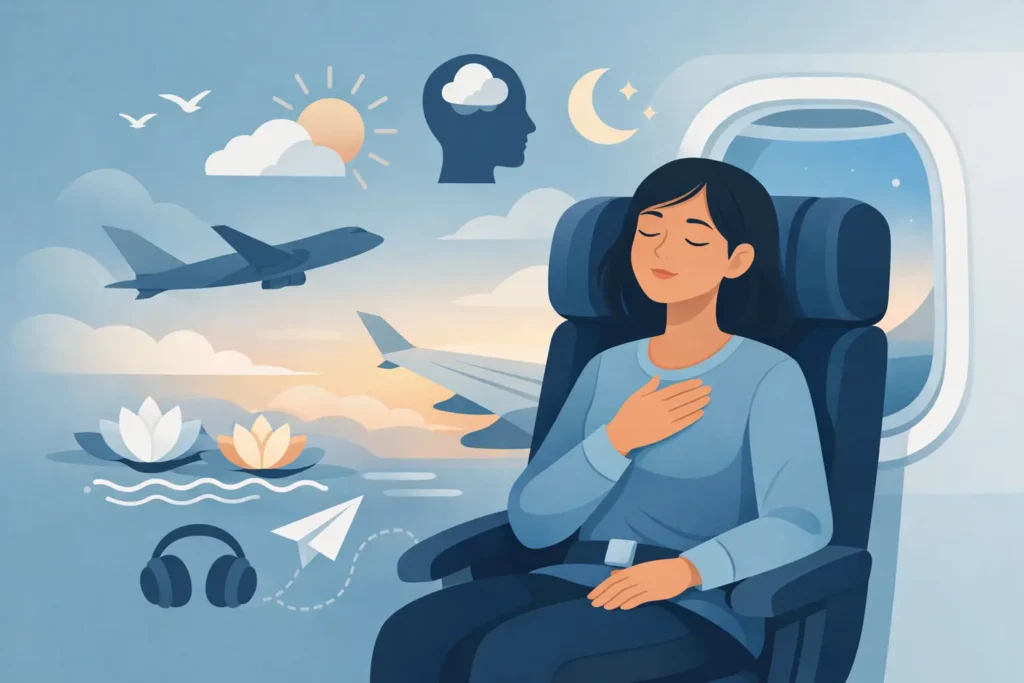
The anxiety often starts long before the plane leaves the ground. It can show up when you book the trip, when you picture turbulence, or the night before you travel when your mind refuses to switch off. If you are searching for how to manage flying anxiety, you are probably not looking for vague reassurance. You want something that actually helps you feel calmer, more in control and able to get on with your journey.
Flying anxiety can be exhausting because it is not always logical. You may know statistically that flying is safe and still feel your stomach drop at the thought of take-off. That does not mean you are weak, dramatic or beyond help. It means your nervous system has learned to treat flying as a threat, and once that pattern is in place, information alone is often not enough to change it.
Why flying anxiety feels so strong
Fear of flying tends to be a mix of different worries rather than one single issue. For some people it is about lack of control. For others it is claustrophobia, turbulence, heights, panic symptoms, or the fear of being trapped and unable to escape. Sometimes it follows a difficult flight. Sometimes it appears after a stressful period in life, even if flying was never a problem before.
This matters because the best way to manage flying anxiety depends on what is driving it. If your fear is mostly about panic, you need tools that reduce the fear of your own body sensations. If it is more about catastrophic thoughts, you need a different approach. If it is linked to a deeper emotional pattern, willpower may keep failing because the problem is sitting at an unconscious level.
Many people make the mistake of trying to overpower the fear. They tell themselves to be sensible, force themselves through it, then feel ashamed when their body reacts anyway. That inner battle usually makes anxiety worse. A calmer approach is to work with the mind and body together.
How to manage flying anxiety before the day of travel
The most useful work often happens before you reach the airport. If you only start trying to calm yourself once you are at the gate, you are already asking a lot of an overstimulated nervous system.
Begin by noticing what exactly you fear. Be specific. Is it take-off, turbulence, enclosed space, loss of control, fainting, embarrassment, or the sense that something terrible will happen? Naming it clearly can reduce the fog around it and helps you choose the right strategy.
It also helps to stop feeding the fear in the days beforehand. That means limiting dramatic flight stories, obsessive checking of weather conditions, and endless reassurance-seeking from friends or family. These habits feel protective, but they keep your brain focused on danger.
Instead, give your mind a steadier message. Write down a short grounding statement you can return to, such as: I can feel anxious and still be safe. My body is reacting to fear, not to actual danger. The aim is not to recite something you do not believe. It is to give your brain a calmer script than the one it has been repeating.
Sleep, hydration and caffeine matter more than people think. If you are already overtired, dehydrated and overstimulated, your body is more likely to tip into panic. This will not cure a flight phobia on its own, but it can lower your baseline anxiety enough to make your other tools work better.
What helps at the airport and on the plane
Once anxiety rises, the goal is not to force it away instantly. That usually creates more pressure. The better aim is to reduce escalation.
Steady breathing can help, but only if you keep it simple. Try breathing in gently for a count of four and out for a count of six. The slightly longer exhale tells your body it can begin to settle. You do not need perfect technique. You just need to avoid shallow, frantic breathing that convinces your system the threat is growing.
Grounding is useful when your thoughts start racing ahead. Bring your attention back to what is physically here. Feel your feet in your shoes. Notice the support of the seat. Hold something cool in your hand. Listen to one clear sound around you. These small anchors can interrupt the spiral.
If you are worried about panic, remind yourself that panic symptoms are frightening but not dangerous. A racing heart, shaky hands, dizziness and a sense of unreality can all happen when adrenaline is high. They are signs of anxiety, not signs that you are losing control. The less you fear the sensations themselves, the faster they tend to pass.
Choose distractions that genuinely absorb you. A familiar podcast, a gentle series downloaded in advance, a puzzle book, or music that your body already associates with calm can all help. The key is preparation. When anxiety is high, decision-making becomes harder, so do not rely on whatever happens to be available on the day.
It can also help to give yourself permission not to love flying. You are not trying to become someone who enjoys every second of it. You are aiming to travel without being overwhelmed by fear.
When reassurance is not enough
People with flying anxiety are often told to read safety statistics or learn more about how planes work. For some, that is helpful. For others, it makes little difference. If your fear is emotional and automatic, more information can bounce straight off.
That is why many intelligent, capable adults still struggle. They know the facts. They may even fly regularly for work or family reasons. But each trip brings the same dread, the same physical symptoms and the same relief when it is over. If that sounds familiar, the issue may be less about knowledge and more about the way your unconscious mind has coded flying.
This is where therapy can be particularly effective. Rather than asking you to white-knuckle your way through each flight, the aim is to change the pattern at source.
How hypnotherapy can help manage flying anxiety
Hypnotherapy can be especially helpful for fear of flying because it works with the part of the mind where automatic fear responses are held. Instead of relying on constant self-discipline, it helps create a calmer association with flying so that the experience feels different from the inside.
For some people, the fear is linked to a past experience. For others, it is rooted in imagined catastrophe, loss of control or panic conditioning. A skilled hypnotherapy approach can address these drivers directly, helping the mind stop treating flying as an immediate threat.
This does not mean pretending there is nothing to feel. It means reducing the emotional charge so you can respond in a more balanced way. Clients often describe feeling calmer before they travel, less reactive during take-off or turbulence, and more able to think clearly rather than spiralling.
At Jennie Francis Hypnotherapy, this kind of work is designed to be practical and results-focused. For many people, the appeal is not just emotional relief but speed. If you have a holiday, family visit or work trip approaching, you want progress that feels real, not endless talking without change.
A realistic way to think about progress
Managing flying anxiety does not always mean going from terrified to completely relaxed overnight. Sometimes it does happen quickly, especially when the root of the fear is identified well. In other cases, progress looks like sleeping properly the night before, boarding without panic, or getting through the flight without the usual dread.
Those changes matter. They build confidence, and confidence grows fastest when it is based on actual experience rather than pressure to be fearless.
It is also worth knowing that setbacks do not mean failure. A bumpy flight, a stressful life event or a long gap between trips can stir things up again. That does not erase your progress. It usually means your nervous system needs reminding, not starting from scratch.
If you have a flight coming up soon
Keep your plan simple. Decide what you will do the night before, what you will do at the airport, and what you will do if anxiety rises on board. Have your calming audio, breathing approach and grounding phrase ready. Avoid turning the whole day into a battle against fear.
Most of all, be careful how you speak to yourself. People with flying anxiety are often hard on themselves because they think they should be able to cope. But shame is not a treatment. Real change tends to happen when you combine practical tools with the right support and address the fear at the level where it actually lives.
You do not have to keep dreading every trip. With the right help, flying can become something you handle calmly, confidently and with far less effort than you may think possible.