Exam Stress Hypnotherapy Sessions Explained
The night before an exam can feel far louder than it looks. Your notes are open, your mind is racing, and the harder you try to relax, the more alert you become. Exam stress hypnotherapy sessions are designed for exactly this kind of pressure – when you know the material, or could know it, but anxiety keeps getting in the way.
For many people, exam stress is not just about nerves. It shows up as a blank mind in the hall, poor sleep the week before, procrastination, nausea, tears, panic, or an exhausting cycle of overworking and underperforming. This is where hypnotherapy can be especially helpful, because it does not only focus on what you think you should do. It works with the deeper patterns that drive how you feel and respond under pressure.
What exam stress hypnotherapy sessions actually do
Hypnotherapy for exam stress helps reduce the emotional intensity around studying and sitting exams. Rather than trying to force confidence on top of fear, it aims to calm the nervous system, interrupt unhelpful thought loops and build a steadier internal response.
In practical terms, that can mean helping you feel calmer when revising, more focused when reading, and less likely to spiral when a deadline or exam date gets closer. It can also support better sleep, which matters more than most students or parents realise. A tired, anxious brain is much more likely to catastrophise, lose concentration and struggle with memory recall.
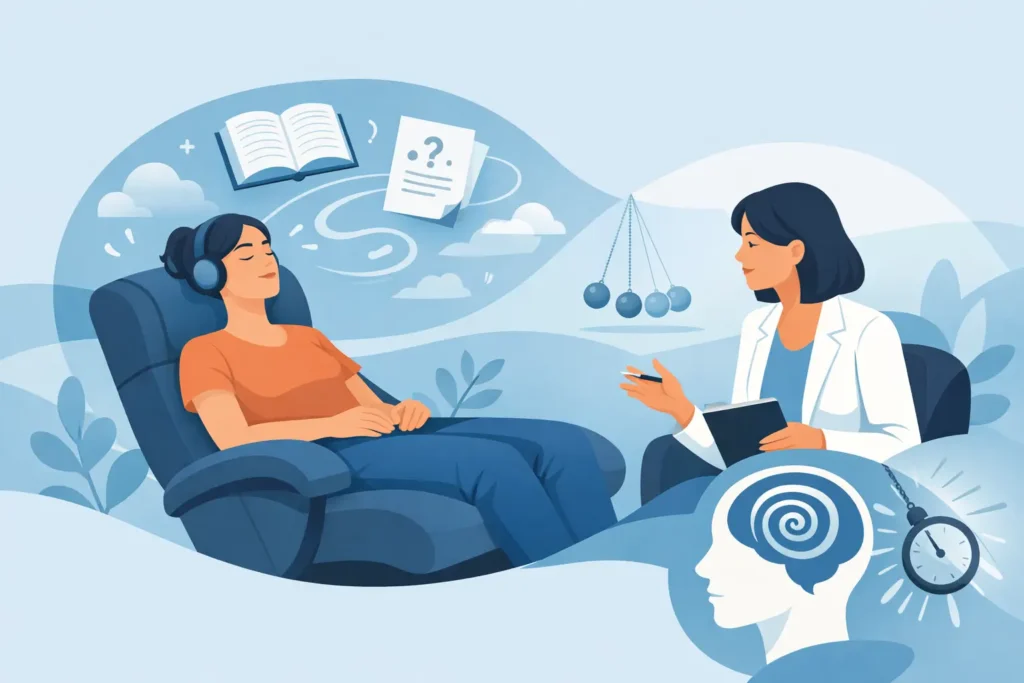
During hypnosis, you are not unconscious or out of control. You remain aware, but in a more relaxed and receptive state. This makes it easier to work with the unconscious patterns that fuel anxiety, avoidance and self-doubt. For some people, those patterns come from a single bad experience, such as freezing in a mock exam. For others, they have built up over years of pressure, perfectionism or fear of disappointing others.
Why exam stress can be so persistent
Exam pressure often gets dismissed as normal. To a point, it is. Most people want to do well, and some nerves can sharpen performance. The problem comes when stress goes beyond useful alertness and tips into panic, dread or shutdown.
At that stage, logic alone is rarely enough. You can tell yourself that one exam does not define your future, but if your body reacts as if you are under threat, the reassurance does not always land. That is why so many bright, capable people still end up crying over revision timetables, putting work off until the last minute, or walking into exams already exhausted.
There can be several reasons for this. Perfectionist students may feel that anything less than top marks is failure. Adults returning to study may carry a long history of self-doubt from school. Teenagers can absorb pressure from family expectations, competitive environments or social comparison. Some people are not afraid of the exam itself so much as what it seems to mean about their intelligence, future or worth.
Hypnotherapy helps by reducing the emotional charge attached to those beliefs and experiences. That does not mean pretending the exam does not matter. It means helping your mind and body respond in a way that is calmer, clearer and more useful.
What happens in exam stress hypnotherapy sessions
A good session should feel safe, clear and purposeful. You would usually begin by talking through what is happening now. That might include symptoms, previous exam experiences, revision habits, sleep problems and the specific situations that trigger anxiety.
From there, the work is tailored. Some clients need help calming panic symptoms quickly. Others need support with concentration, motivation or confidence. Sometimes the issue is not fear of failure but fear of success, visibility or expectation. This is why a one-size-fits-all approach rarely works well.
The hypnotic part of the session usually involves guided relaxation and focused therapeutic language designed to shift your response to exams and revision. Depending on the person, this may include reducing anticipatory anxiety, strengthening a sense of control, rehearsing calm performance or letting go of a past negative experience that still feels emotionally present.
Many clients are surprised by how natural it feels. Hypnosis is not something done to you while you lose awareness. It is a collaborative process that helps you access a calmer, more responsive state. For people who have spent months trying to battle stress with pure willpower, that often feels like a relief.
Exam stress hypnotherapy sessions and revision performance
One of the biggest myths around exam support is that confidence alone fixes everything. It does not. If revision methods are chaotic, sleep is poor and stress is constant, confidence can wobble very quickly.
What hypnotherapy can do is make good habits easier to follow. When anxiety drops, concentration often improves. When the dread around studying reduces, procrastination can ease. When you are sleeping better, memory and recall tend to improve as well. These changes may sound simple, but they can have a real effect on performance.
That said, hypnotherapy is not a shortcut for learning content you have not studied. It works best when used to support clearer thinking, steadier emotions and more effective preparation. If someone is hoping to avoid revision entirely and still perform brilliantly, that is unlikely to be realistic. The real strength of this work is helping you use your ability under pressure, instead of losing access to it when you need it most.
Who this can help
Exam stress is not limited to school pupils. University students, trainee professionals and adults taking career-based qualifications often feel just as much pressure, sometimes more. There may be financial stakes, family commitments or the added strain of returning to study after years away.
It can also help people who appear to cope well on the outside but are paying for it privately. They may be working late into the night, revising obsessively, snapping at family members or feeling sick every morning in the run-up to an exam. Functioning is not the same as coping.
For younger clients, the right approach matters. Support needs to be calm and practical, never patronising. For adults, there can be embarrassment about needing help at all. Neither response is unusual. Anxiety does not mean weakness, and getting support early can prevent a stressful exam period from becoming a longer pattern of avoidance and low confidence.
How many sessions are usually needed
This depends on the person, the severity of the stress and how long the pattern has been in place. Some people notice a meaningful shift quite quickly, especially when the issue is focused and recent. Others benefit from a short course of sessions to address both immediate exam nerves and the underlying beliefs driving them.
In a practice such as Jennie Francis Hypnotherapy, where the focus is on practical, measurable change, clients often want to know whether this can work within a limited timeframe. In many cases, yes. If exams are approaching, even a small number of focused sessions can help reduce panic and improve your sense of control. If the anxiety is longstanding or tied to wider confidence issues, more support may be appropriate.
The key point is that this should feel targeted, not open-ended for the sake of it.
What to look for in support
Experience matters, especially with anxiety and performance issues. You want someone who can create a calm space, explain the process clearly and adapt the work to the pressures you are facing. Exam stress is not only about relaxation. It is about performance under scrutiny, and that requires a thoughtful, results-focused approach.
It is also reasonable to want reassurance about professionalism, privacy and whether online sessions can be effective. For many clients across the UK, online hypnotherapy works very well and offers a practical option when travel, revision schedules or location make face-to-face sessions difficult.
If you are sceptical, that is fine. You do not need to be someone who instantly loves the idea of hypnosis for it to help. You only need to be willing to engage with the process and open to doing things differently from the approaches that have left you stuck.
Exams can matter without taking over your life. The goal is not to become a different person overnight. It is to feel calm enough, clear enough and confident enough to show what you already know when the moment arrives.