
Can Hypnotherapy for Insomnia Help You Sleep?
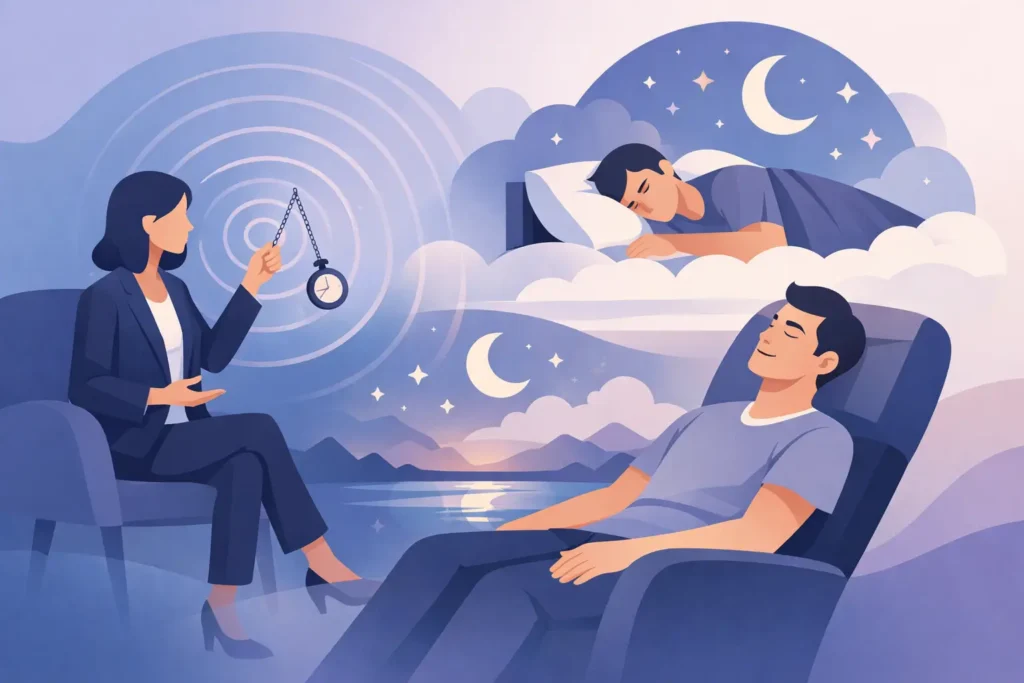
You can be exhausted all day, then suddenly wide awake the moment your head hits the pillow. For many people, insomnia is not really about sleep at all. It is about tension, anticipation, overthinking and a mind that has learnt to stay switched on. That is why hypnotherapy for insomnia can be so effective. Rather than forcing sleep, it helps change the patterns underneath it.
If you have tried the obvious advice – less caffeine, a darker room, fewer screens – and you are still lying awake at 2am, it can start to feel deeply personal. You may begin to dread bedtime. You may watch the clock, worry about tomorrow, and unintentionally train your body to associate bed with frustration rather than rest. At that point, more effort is rarely the answer. A calmer, more natural approach usually works better.
Why insomnia often becomes a learned pattern
Most people do not start with a serious sleep problem. Often, there is a trigger. It might be stress at work, a period of anxiety, family pressure, grief, hormonal changes, a health worry or a run of poor nights that knock your confidence. The difficulty comes when the original cause fades, but the sleep problem stays.
Your mind begins to expect wakefulness. You notice every sensation. You monitor whether you are drifting off. You try hard to sleep, which creates more pressure, and pressure keeps you alert. It becomes a cycle. The body is tired, but the unconscious mind is still on guard.
This is one reason insomnia can feel so stubborn. It is not simply a bad habit in the usual sense. It is a conditioned response, reinforced night after night. That is also why sheer willpower tends not to solve it. Sleep does not respond well to force.
How hypnotherapy for insomnia works
Hypnotherapy for insomnia focuses on the unconscious patterns that keep sleep difficult. In a relaxed state, the mind is often more open to new associations, calmer responses and healthier habits. The aim is not to knock you out or make you lose control. It is to help your nervous system step away from alertness and into rest.
For some people, the main issue is racing thoughts. For others, it is anxiety about not sleeping, waking in the night and not being able to drift off again, or feeling physically tense at bedtime. Hypnotherapy can be tailored to the real driver of the problem, rather than treating every poor sleeper as though they are the same.
That matters, because insomnia is rarely one-size-fits-all. Someone who cannot switch off after a stressful job may need a different approach from someone whose sleep has been disrupted by panic, low confidence, or years of worrying. A skilled therapist looks at the pattern behind the symptom.
In practice, sessions often involve helping you relax deeply, identifying the thoughts and triggers linked to poor sleep, and then working to change the unconscious response. Instead of bed meaning effort, frustration or hypervigilance, it can begin to feel safe, familiar and restful again.
What hypnotherapy can help with
Insomnia shows up in different ways. You may struggle to fall asleep, wake repeatedly, wake very early, or sleep lightly and feel unrefreshed. Sometimes the sleep problem sits alongside anxiety. Sometimes it appears during a difficult chapter of life and then refuses to leave.
Hypnotherapy can be especially helpful when your sleep difficulty is linked to stress, overthinking, bedtime dread, a busy mind, emotional tension or a long-standing pattern of poor sleep. It can also support people who know they are tired but feel mentally unable to let go.
Where it helps most is in changing the relationship with sleep. That shift is often underestimated. The more worried you become about sleep, the harder sleep can be. When that anxiety drops, the body often does what it already knows how to do.
There are, of course, cases where insomnia has a strong medical component. Pain, medication, hormonal changes, sleep apnoea, depression and other health issues can all affect sleep. Hypnotherapy can still be supportive in some situations, but it should never replace proper medical advice when symptoms suggest an underlying condition. Good therapy is practical as well as compassionate.
What a session may feel like
People sometimes hesitate because they imagine hypnosis as something strange or theatrical. In reality, clinical hypnotherapy is usually calm, ordinary and deeply relaxing. You remain aware. You can hear what is being said. You are not unconscious, and you cannot be made to do anything against your wishes.
Many clients describe it as a welcome pause from mental noise. That in itself can be powerful when insomnia has left you keyed up for weeks or months. You are learning, through direct experience, that calm is possible again.
An experienced hypnotherapist will also look at the wider context. What happens in the hour before bed? What thoughts appear when you wake in the night? Are you carrying stress all day and expecting the mind to switch off instantly at bedtime? Are you sleeping badly because of one specific fear, or because your whole system has got stuck in overdrive?
That kind of focused, one-to-one work is often where progress happens quickly. At Jennie Francis Hypnotherapy, the emphasis is on practical change, with many issues improving within three to six sessions depending on the person and the pattern involved.
Why people often try everything else first
Sleep problems can make people surprisingly hard on themselves. They tell themselves to be sensible, to stop thinking, to relax. None of that helps when the unconscious mind has learnt a different script. In fact, trying harder can increase frustration and keep the cycle going.
This is why hypnotherapy appeals to people who are tired of battling with themselves. It works with the mind rather than against it. For many clients, that feels like a relief. Change becomes less about discipline and more about removing what is in the way.
It is also why people who are sceptical sometimes respond well once the process is explained properly. You do not have to believe in anything magical. You simply need to be willing to engage with a method designed to reduce mental and physical arousal and reshape an unhelpful pattern.
How quickly can sleep improve?
That depends on what is driving the insomnia and how long it has been in place. Some people notice a change quite quickly, especially when stress and anticipatory anxiety are the main issues. Others need more time, particularly if the sleep problem has been reinforced over many years or sits alongside broader anxiety.
What tends to improve first is not always the number of hours slept. Sometimes it is the fear around bedtime, the tension in the body, or the sense of panic when waking in the night. Those shifts matter. They often create the conditions that allow sleep to return more naturally.
Progress is not always perfectly linear. You might have a better week, then a poor night after stress, travel or illness. That does not mean the work has failed. It usually means you are human. The goal is not to create a life with no disturbed nights ever again. It is to help your system recover more easily and stop one bad night turning into a spiral.
Is hypnotherapy for insomnia right for you?
If your sleep has become tied up with anxiety, overthinking, stress or frustration, it may be an excellent fit. If you feel stuck in a pattern that logic alone has not shifted, working at the unconscious level often makes sense. It can be particularly valuable if you are fed up with white-knuckling your way through each night.
It may be less straightforward if your insomnia is strongly driven by untreated medical issues, heavy alcohol use, severe depression or a medication effect. In those cases, hypnotherapy may still play a part, but usually alongside wider support.
The key question is not whether you should be able to sleep by now. It is what is keeping the problem in place. Once that becomes clearer, the route forward often feels much less mysterious.
Sleep returns best when it stops being a nightly test. With the right support, your mind can relearn what rest feels like, and bedtime can become ordinary again – which, when you have been struggling, is exactly what you want.