
What Is a Stop Smoking Programme?
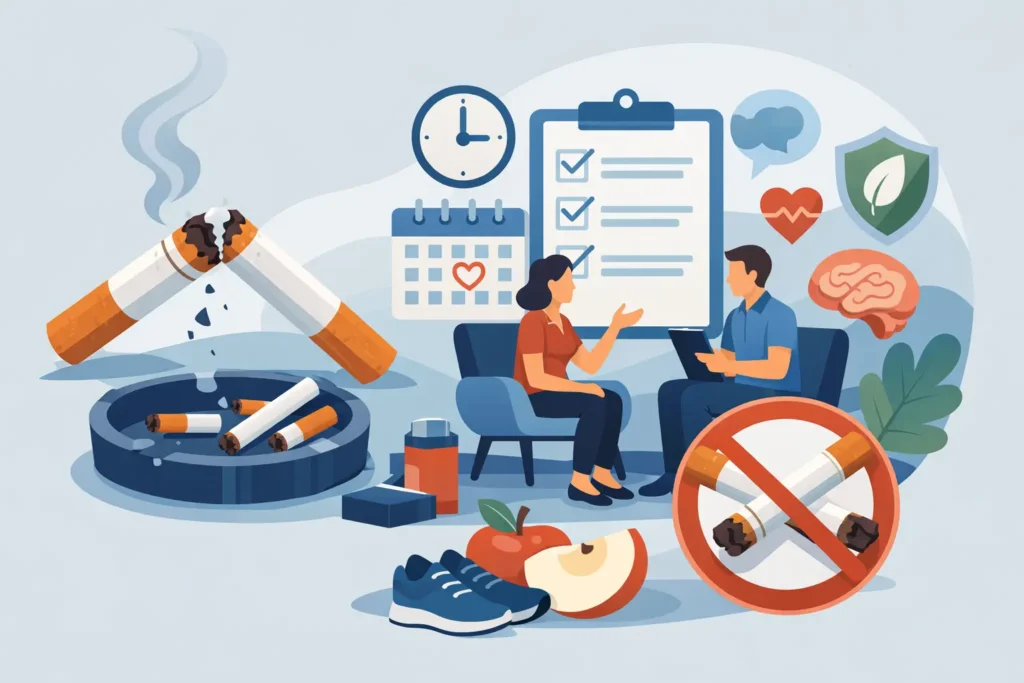
Most smokers do not need another lecture about the risks. They already know. What they usually need is a way out that feels realistic. If you have tried to stop before and found yourself back at square one within days or weeks, you may be wondering what is a stop smoking programme and whether it could finally make the difference.
A stop smoking programme is a structured form of support designed to help you stop smoking and stay stopped. That structure matters. Rather than relying on willpower alone, a programme gives you a clear process, practical tools and accountability. It can include behavioural support, nicotine replacement, medical advice, counselling or hypnotherapy, depending on the approach.
The key point is this: a good programme does more than tell you to quit. It helps you understand why you smoke, what keeps the habit going and how to respond differently when cravings, stress or routine try to pull you back in.
What is a stop smoking programme in practice?
In practice, a stop smoking programme is not one single method. It is an organised plan built around helping you change a deeply embedded pattern. Some programmes are run through local health services. Others are offered privately by therapists or specialists. Some focus mainly on nicotine withdrawal, while others deal more directly with the emotional and habitual side of smoking.
Most programmes include a quit date or target point, some preparation beforehand and support afterwards. That support may be weekly sessions, tailored advice, check-ins or techniques to reduce cravings and break associations. If you smoke with your morning coffee, in the car, during work breaks or when you feel under pressure, a programme should help you tackle those triggers rather than pretending they do not exist.
This is why structure often succeeds where determination alone does not. Smoking is rarely just about nicotine. It becomes linked to identity, stress relief, reward, routine and even companionship. A programme works best when it addresses the whole pattern.
Why people struggle when they try to stop alone
Many smokers are hard on themselves. They say they lack discipline or that they should be able to stop if they really wanted to. In reality, smoking tends to operate on more than one level at once.
There is the physical dependence on nicotine, of course. But there is also the unconscious habit loop. You finish a meal and want a cigarette. You feel tense and reach for one automatically. You get five minutes to yourself and smoking becomes the way you mark that pause. Over time, those links become so familiar that they can feel stronger than logic.
That is one reason stop smoking programmes can be effective. They interrupt the automatic nature of the habit. They help you prepare for the moments that usually catch you out, instead of expecting you to think your way through every craving in real time.
What a stop smoking programme may include
The exact content depends on the provider and the method. Some programmes use nicotine patches, gum or lozenges to ease withdrawal. Some involve prescription medication. Some are built around talking therapy or behavioural coaching. Others use hypnotherapy to help shift the habit at an unconscious level.
A well-designed programme will usually include assessment, planning and follow-through. First, there is an honest look at your smoking pattern. How much do you smoke? When do you smoke most? What role does it play in your day? Then there is a clear stop plan, including what to expect physically and emotionally. After that comes support to help you hold the change.
This support matters because the first few days are not the whole story. Many people can stop briefly. The challenge is staying free when life becomes busy, emotional or unpredictable again.
The role of mindset and unconscious habits
This is where many stop smoking programmes differ. Some focus heavily on replacing nicotine. That can be useful, especially for managing withdrawal. But if smoking has also become your way to cope, switch off, take control or self-soothe, then removing nicotine alone may leave the deeper pattern untouched.
Hypnotherapy-based programmes work from a different angle. Instead of battling yourself all day, the aim is to change how smoking feels and what it means to you. When the unconscious mind stops treating cigarettes as helpful, comforting or necessary, the urge can reduce more naturally.
For many people, this feels like a relief. They are not trying to white-knuckle their way through each day. They are changing the response at its source. That does not mean there is no effort involved, but it can feel far less like a constant internal fight.
Is one approach better than another?
It depends on the smoker. Someone with a strong physical dependence may benefit from nicotine replacement or medical support. Someone whose smoking is tied closely to stress, emotion or long-standing routines may need a programme that tackles those patterns more directly.
The most effective support is usually personal rather than generic. A leaflet, an app or a public campaign can be helpful reminders, but they cannot tailor the process to you. A structured programme should take account of your triggers, your motivation and the reasons previous attempts have not lasted.
This is also why there is no point choosing a stop smoking programme simply because it sounds strict or impressive. The best programme is one you can engage with honestly. If you hate group settings, a one-to-one approach may suit you better. If you are wary of medication, you may prefer a behavioural or hypnotherapy route. If you need regular accountability, ongoing sessions may help more than a single intervention.
What to look for in a stop smoking programme
Look for clarity, experience and a method that makes sense to you. You should understand what the programme involves, how many sessions or stages there are, and what kind of support you will receive.
It is also worth looking at whether the programme deals with relapse prevention. Stopping smoking is not only about the final cigarette. It is about what happens at the difficult dinner, the stressful Tuesday, the long drive, the row at home or the celebration drink. If support ends the moment you stop, it may not be enough.
Professional credibility matters too. If you are working with a therapist, you want someone experienced, calm and used to helping people change entrenched habits. If you choose hypnotherapy, you should feel safe, informed and confident in the process. For many clients, that combination of warmth and authority is what allows them to relax and fully engage.
Where hypnotherapy fits in
For smokers who are tired of battling themselves, hypnotherapy can be a particularly effective part of a stop smoking programme. It works by helping you access a calmer, more receptive state in which unhelpful associations can be updated. Rather than cigarettes feeling like relief, reward or support, they begin to feel unnecessary and out of step with who you are becoming.
That shift can be powerful because smoking is so often maintained by automatic responses. If you can change the automatic response, change becomes easier to sustain.
At Jennie Francis Hypnotherapy, the focus is on practical, lasting transformation rather than endless talking about the problem. That matters to people who already know they want to stop and simply need the right help to do it properly.
Common concerns people have
Some people worry that a stop smoking programme will feel judgemental. A good one should not. Smoking is a habit, not a moral failing. You need support that is straightforward and respectful, especially if you already feel cross with yourself.
Others worry that if they have failed before, nothing will work. Previous attempts do not prove you cannot stop. They usually reveal that the method did not address the right part of the problem. Many smokers have tried to quit several times before finding an approach that finally fits.
There is also the fear of missing smoking. This is very common. Even people desperate to stop can feel anxious about letting it go. That is another reason personalised support helps. It gives space for that ambivalence without allowing it to run the show.
When a programme is most likely to work
A stop smoking programme is most likely to work when you are genuinely ready for change, even if you still feel nervous about it. You do not have to feel perfectly confident. You simply need to want freedom more than you want another cycle of stopping and starting.
The right support can then build on that readiness. It can help you move from hoping to stop to actually becoming a non-smoker. That is a very different mindset. One is tentative. The other is decisive.
If you have been asking what is a stop smoking programme, the real answer is that it is a framework for change. At its best, it gives you more than advice. It gives you a proper chance to stop in a way that feels supported, structured and possible.
If smoking has been part of your life for years, it can be hard to picture yourself without it. But people do make that change every day, often more quickly and comfortably than they expected, once they stop trying to do it all on their own.