
How to Overcome Fear of Flying
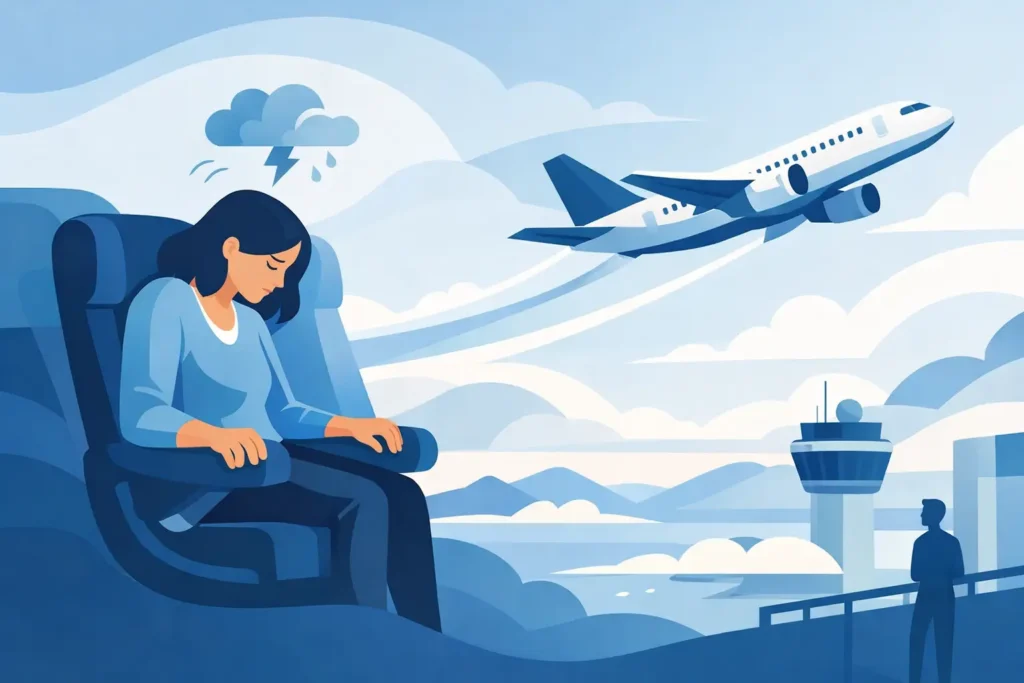
The fear often starts long before the airport. It can begin when the trip is booked, when someone mentions turbulence, or at the sight of a boarding pass sitting on the kitchen side. If you are searching for how to overcome fear of flying, you are probably not looking for vague reassurance. You want to know why this fear feels so powerful, and what actually helps.
Fear of flying is rarely just about the plane. For some people, it is about feeling trapped. For others, it is the loss of control, the fear of panic, or a mental picture of something going wrong that plays on repeat. You may know logically that flying is safe, but logic does not always calm the part of the mind that reacts instinctively. That is why trying to simply “be rational” so often falls flat.
Why fear of flying feels so intense
A flying phobia can be deeply physical. Your heart races, your stomach tightens, your breathing changes, and suddenly your body behaves as though there is immediate danger. Once that alarm response starts, the mind quickly joins in. You scan for signs of trouble, notice every sound, and become even more alert.
This is one reason the fear can become entrenched. The body reacts first, the mind then searches for evidence to justify the reaction, and the whole experience starts to feel convincing. After a while, even planning a journey can trigger the same cycle.
Past experience matters too. A turbulent flight, a panic attack on board, grief, stress, or a period of general anxiety can all make flying feel harder than it once did. Sometimes the fear seems to come out of nowhere, but often it has quietly attached itself to a time when life already felt less stable.
How to overcome fear of flying by understanding your trigger
Not everyone fears the same thing, so the best approach depends on what is driving your anxiety. If your main fear is crashing, you may need help separating realistic concern from catastrophic thinking. If you fear being trapped, then strategies around control, exit anxiety and body-based calming will be more useful. If you are worried about having a panic attack in public, the work needs to target panic itself rather than the aircraft.
This matters because generic advice can be frustrating. Someone telling you to look at safety statistics may help a little, but if your real fear is being unable to get off the plane, the numbers do not reach the problem. Real progress usually starts when the fear is identified accurately.
A simple question can help. Ask yourself, “What is the worst part of this for me?” The first honest answer is often more revealing than the one you give other people.
What helps before you travel
The days before a flight can either reduce anxiety or feed it. Many people unintentionally make the build-up worse by repeatedly checking weather reports, watching videos about turbulence, or rehearsing every possible disaster. That may feel like preparation, but it usually keeps the nervous system on alert.
A better approach is to prepare in a way that creates steadiness. Keep routines as normal as possible. Get enough sleep in the days beforehand. Cut down caffeine if you know it makes you jittery. Eat regularly rather than arriving at the airport over-hungry and tense. If you tend to rush, leave extra time so the journey starts at a calmer pace.
Mental rehearsal can also help, if it is done properly. Instead of imagining the worst, picture yourself moving through the airport feeling grounded, taking your seat, breathing steadily, and noticing the flight becoming manageable. The goal is not to force fake confidence. It is to give your mind a different script.
What to do when anxiety rises on the plane
When fear spikes in the cabin, people often fight it. They tense their muscles, hold their breath, and tell themselves not to panic. Unfortunately, that struggle can intensify the sensation. A more effective response is to lower the body’s alarm state first.
Start with your breathing, but keep it gentle. Deep breathing can sometimes make anxious people feel worse, especially if it turns into over-breathing. Instead, breathe in quietly through the nose and make the out-breath a little longer than the in-breath. Slow, steady, and unforced is enough.
Then widen your focus. Anxiety narrows attention, which is why every noise and movement on the aircraft can seem loaded with meaning. Looking around the cabin, noticing neutral details, and feeling your feet against the floor can help bring your mind out of threat mode.
It can also help to stop interpreting every sensation as proof that something is wrong. Turbulence feels unpleasant, but unpleasant does not mean dangerous. A racing heart feels dramatic, but it is a common anxiety response, not a sign that you are losing control. This shift sounds small, but it is powerful.
Why reassurance alone is not always enough
Many anxious flyers are told to distract themselves, have a drink, or think positive thoughts. These may take the edge off for some people, but they do not always create lasting change. If the fear sits at an unconscious level, surface-level coping has limits.
That is why some people keep flying but never feel better. They get through each journey, yet remain tense from booking to landing. Others begin avoiding travel altogether, turning down holidays, work trips or family events because the emotional cost feels too high.
If that sounds familiar, it does not mean you are weak or beyond help. It usually means the fear needs to be addressed at the level where it is being generated, rather than managed with willpower alone.
How hypnotherapy can help with fear of flying
For many people, fear of flying responds well to hypnotherapy because the problem is not a lack of information. It is an automatic response. Hypnotherapy works with the unconscious patterns that drive that response, helping the mind and body feel safer without the same internal battle.
In practice, that may involve reducing the old panic association, changing the way your mind anticipates the flight, and building a calmer sense of control. Sessions are tailored to the person, because a fear rooted in turbulence is different from one rooted in claustrophobia or panic.
A good hypnotherapy approach is not about making you feel forced or out of control. Quite the opposite. It is about helping you regain control in a way that feels natural. For clients who have tried reasoning with themselves, reading every article, or pushing through flights with gritted teeth, this can feel like a relief.
At Jennie Francis Hypnotherapy, this kind of focused work is designed to create practical change quickly, often within a small number of sessions, so that travel no longer feels like an ordeal.
How to overcome fear of flying for the long term
Long-term progress comes from changing the association, not just surviving the next flight. That means reducing avoidance where possible, because avoidance teaches the brain that the fear must be valid. It also means noticing the habits that keep the fear alive, such as constant checking, catastrophic self-talk, or relying on rituals that make you feel temporarily safer but reinforce the idea that flying is dangerous.
That said, there is no prize for forcing yourself too hard. The right pace matters. Some people benefit from immediate focused therapy before a booked flight. Others want time to work on the problem gradually. It depends on how severe the fear is, whether panic is involved, and how long the pattern has been in place.
Progress is often quieter than people expect. You may not feel wildly excited about flying. You may simply notice that your body is calmer, your thoughts are less dramatic, and the journey no longer takes over your life. That is real change.
If flying has become a source of dread, shame or limitation, it can be treated. You do not have to keep white-knuckling your way through every trip, and you do not have to keep missing out. With the right support, the mind can learn a different response – one that leaves you freer to travel, work and enjoy your life with far more ease.